
D.BD.003 — Still Seeing Red: The Enduring Legacy of Guards Red
Guards Red once defined Porsche’s visual identity — but in an era of Miami Blue, Chalk, Carmine, and Paint-to-Sample, does it still matter?

An earlier version of this article was first published in Porsche Club of America — Rocky Mountain Region magazine High Gear in December 2025.
I’ve had a complex relationship with the color red. While it’s always been one of my favorite colors, I’ve been a little reluctant to wear it on a car.
My first two vehicles were bright red, but what followed was nearly two decades of only black or dark silver. That changed in 2023, when I found myself at a crossroads between two nearly identical 991.1 Carrera 4S models — one in Jet Black Metallic (W08) and one in Guards Red (L84A). Seeing the red in person pulled at something deeper — a distant, emotional memory — and I took the plunge.
Few Porsche colors spark instant recognition and spirited debate like Guards Red. It’s a color that splits opinion — some call it iconic, others see it as dated, and some wonder what makes a flat red stand out at all. But behind its bright, almost defiant hue lies one of the longest-running paint codes in Porsche history.
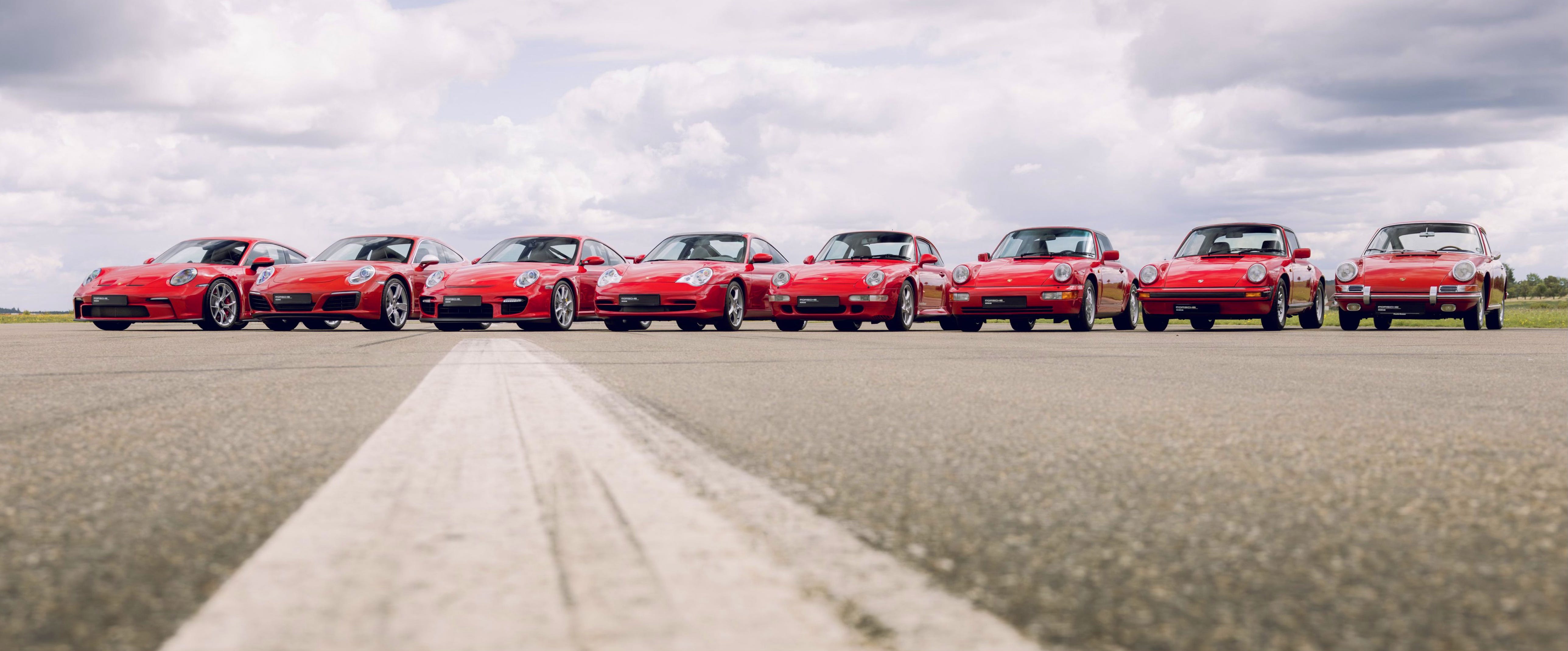
So, the question stands: is Guards Red still as impactful and relevant today as it was when it first emerged? Or has it simply become a nostalgic throwback — a chromatic tribute to Porsche’s golden era?
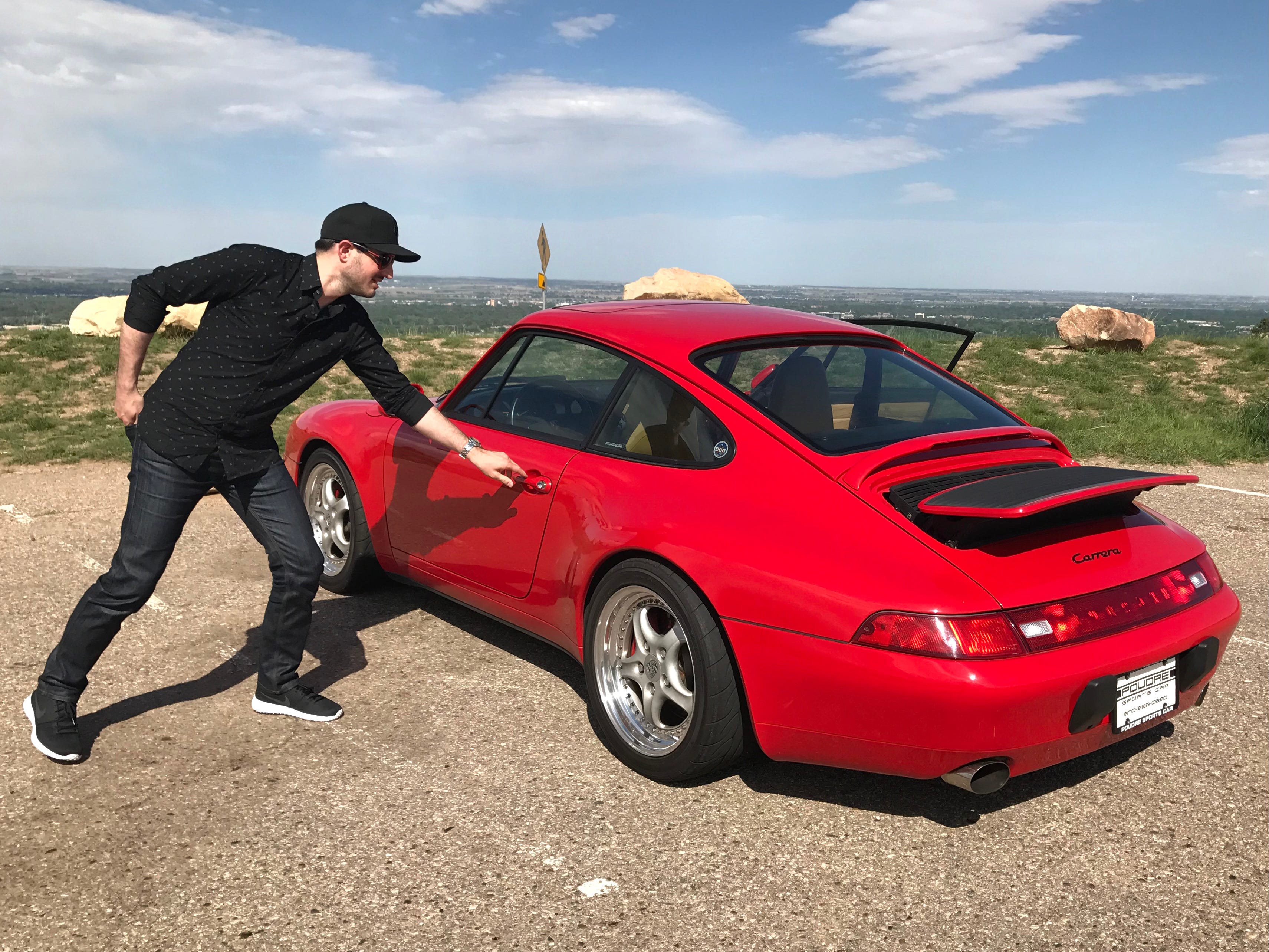
My own hesitation around Guards Red didn’t come from theory — it came from experience. In 2017, I very nearly bought a Guards Red 993 Carrera that passed through a small shop in Fort Collins, Colorado called Poudre Sports Car. They always seemed to have a healthy rotation of air-cooled 911s, and I’d driven past the place more times than I could count. This one had the right spec, drove beautifully, and felt honest — but the color gave me pause.
The interior was well cared for, but the exterior told a different story. Years of sun and exposure had left the paint with a distinct patina — patchy clear coat, uneven wear, pitted front end from spirited driving (as it should be) and a tone that had drifted closer to a muted, almost gentle deep pink than the warm Guards Red I associated with the name. It wasn’t ugly — but it wasn’t what the color promised either.
A Color Born for Speed
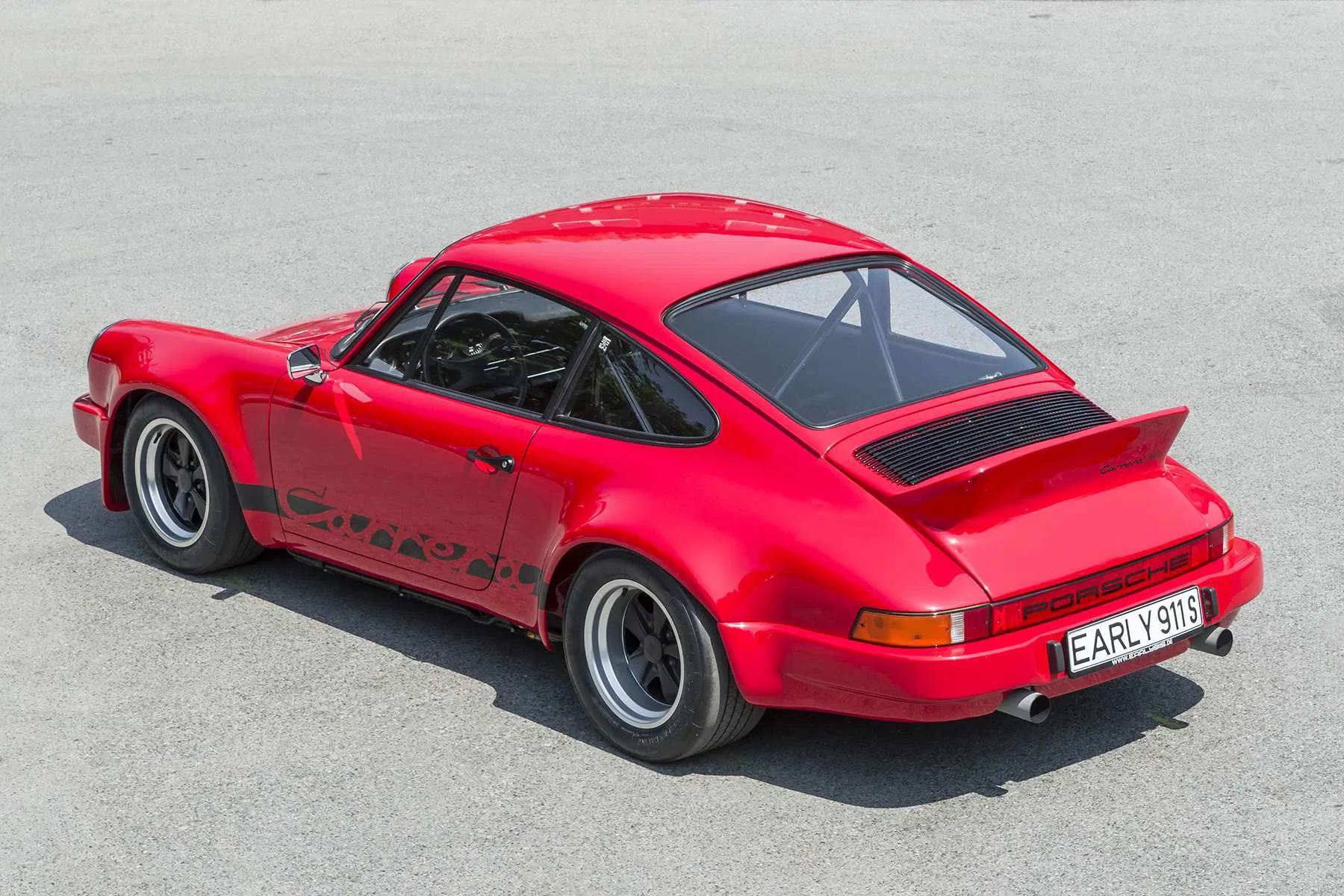
First offered in 1974, Guards Red — known in German as Indischrot (often referred to as “India” or “Indian Red”) and originally cataloged under paint code 027 — quickly became synonymous with the Porsche 911. It followed the earlier Tangerine — a more orange-leaning red seen in the late ’60s/early ’70s palette — and pushed Porsche’s reds toward something cleaner and more assertive. Guards Red was bolder and cleaner — a color that fit perfectly with the rising performance persona of the G-series 911.
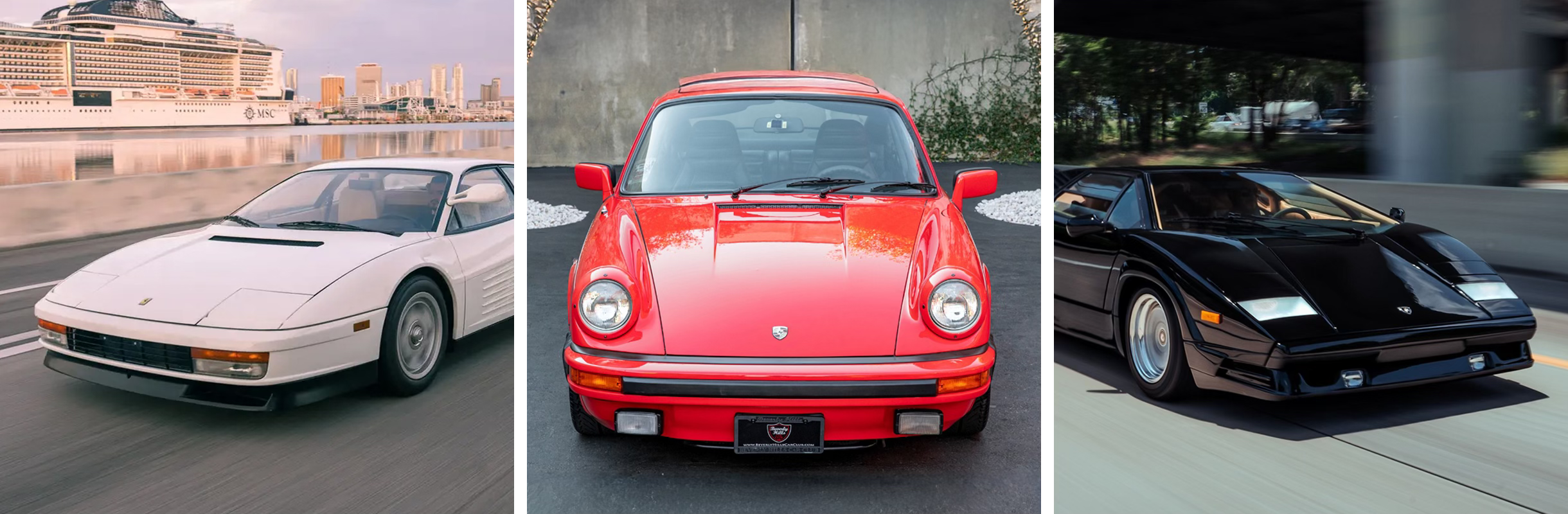
By the 1980s, Guards Red had exploded in popularity. While exact figures are elusive, Guards Red was so popular in the 1980s that some estimate nearly one in three 911s wore it. In an era of white Testarossas and black Countachs, a Guards Red 911 Carrera with Fuchs wheels wasn’t just a Porsche — it was the Porsche.
Universality and Ubiquity
Guards Red didn’t remain confined to the 911. The color appeared across nearly every Porsche model line from the late 1970s through the 2000s — including the 924, 944, 968, 928, and Boxster. While that ubiquity made it a familiar sight, it may also have undermined its sense of exclusivity. As other manufacturers offered similar flat reds, Guards Red started to feel less like a signature and more like a standard.
And in our modern landscape dominated by metallic flake, three-stage pearls, and bespoke Paint-to-Sample finishes, Guards Red is refreshingly simple — or unimaginatively flat, depending on who you ask.
Motorsport Heritage: Red at Full Throttle
Guards Red isn’t just a street color — it’s steeped in Porsche’s motorsport DNA.
In 1973, the International Race of Champions (IROC) series featured a grid of identically prepared 911 Carrera RSRs painted in bright, distinguishable colors—including reds — which helped introduce the look to a wide motorsport audience. The RSR’s aggressive stance paired with the arresting red paint made a statement that stuck — one of performance, aggression, and purpose.
Enthusiast records and period photography suggest that Guards Red was among the IROC colorways, helping introduce the hue to a wider motorsport audience.
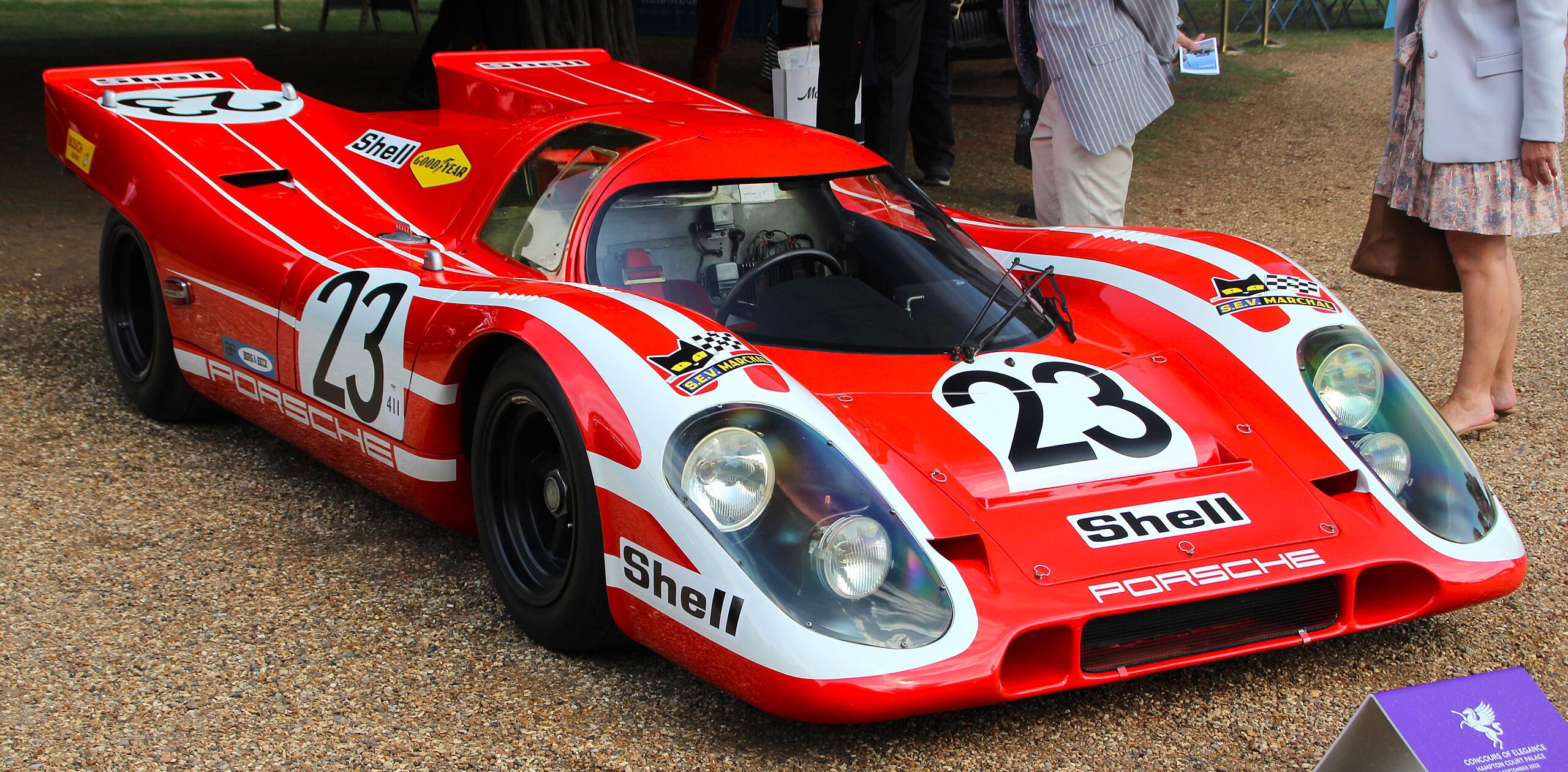
A few years earlier, in 1970, Porsche earned its first overall win at the 24 Hours of Le Mans with the 917K, famously painted in red and white by Porsche Salzburg. While not officially Guards Red, the resemblance helped forge an early emotional link between red Porsches and race-winning heritage.
Through the ’80s and ’90s, Porsche 956s and 962s dominated endurance racing under a wide range of iconic liveries—factory and privateer alike. Red remained a recurring signal of competition: vivid, fearless, and unapologetic.
Even today, Guards Red continues to make appearances in club racing, GT series, and enthusiast events. It’s a shade that instantly communicates Porsche’s motorsport legacy — and one that continues to earn respect on the track.
Enter Carmine: The New Red King?
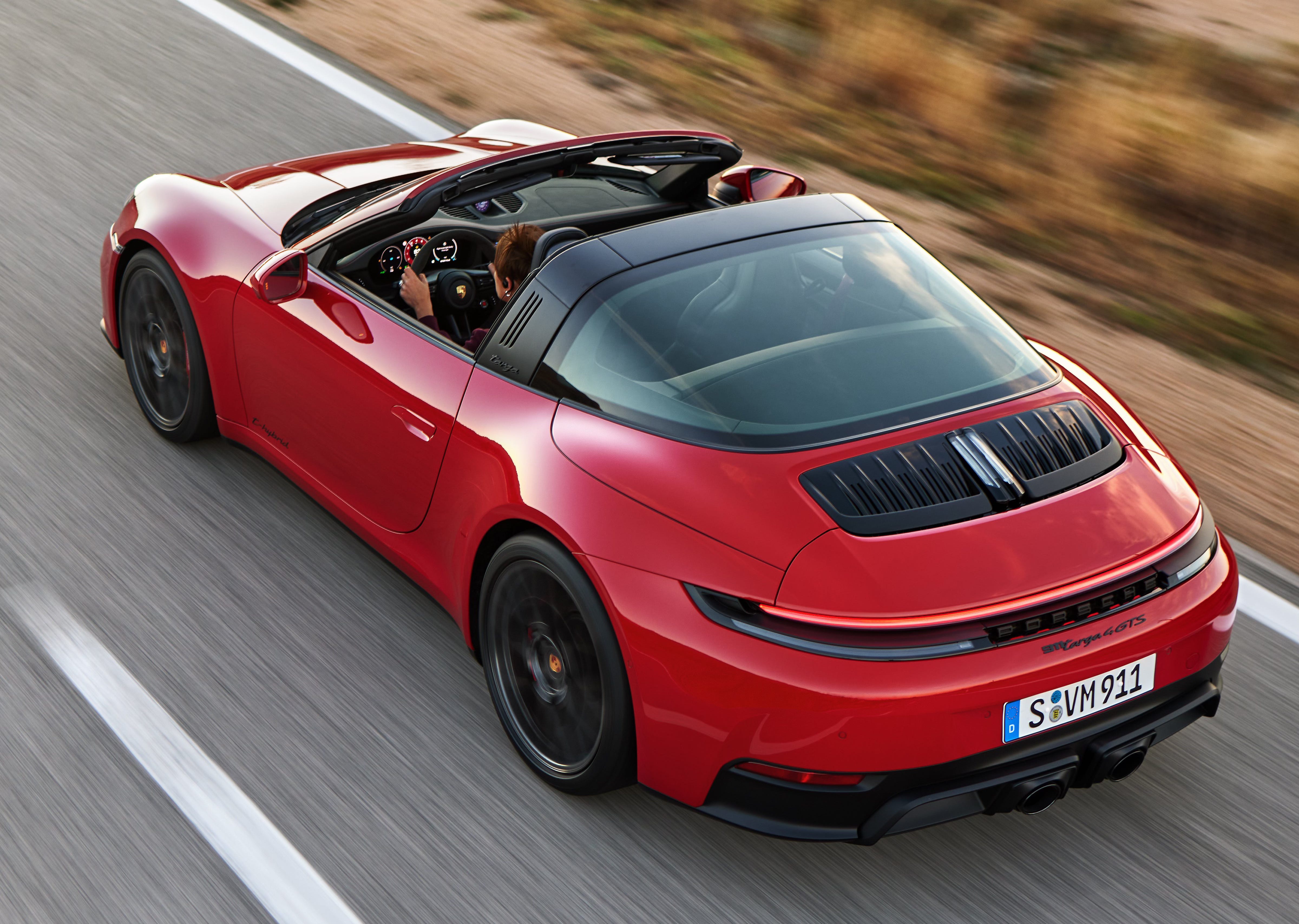
In recent years, Carmine Red (M3C) has seemingly dethroned Guards Red in Porsche popularity polls. Richer, deeper, and intense Carmine is a more luxurious red — better suited to modern curves, deeper paint layers, and an audience seeking exclusivity. It hasn’t hurt that Carmine’s association with Porsche’s GTS models has provided a further boost in exclusivity and desirability.
Carmine’s surge could be viewed as part of a broader trend: Porsche enthusiasts increasingly opt for more complex or rare finishes, whether it’s Chalk, Miami Blue, or Ruby Star. Guards Red, once a bold statement, now feels almost… common.
It’s that lingering image — and others like it — that has shaped how many people, myself included, have historically viewed Guards Red and similar flat reds. Faded examples loom large in memory, and for years they colored my perception of the hue itself rather than the conditions it had endured.
What’s easy to overlook is just how dramatically modern paint technology has changed the equation. Improved UV resistance, deeper clear coats, and higher-quality finishes have fundamentally altered how Guards Red behaves in contemporary applications. When I first saw the 2013 Guards Red 991 that opens this story in the online listing, I dismissed it outright. But in person — especially in full sunlight — the color came alive. The paint seemed to glow from within, as if light were passing through layers rather than bouncing off the surface. There was a subtle subsurface scattering effect that made the car feel almost electric — vibrating at a frequency that bypassed logic and went straight to my heart.
So while Carmine may be deeper, more modern, and comes with affinity to a desirable sub-brand within Porsche, there’s still something pure about what Guards Red offers.
But Is It Still Relevant?
The answer might depend on what you’re looking for in a Porsche color.
If you want rarity, Guards Red probably isn’t it. If you want subtlety, definitely not. But if you want authenticity — something that screams 911, then Guards Red remains unrivaled.
It’s a color that wears its history on its sleeve, unafraid of its ’80s bravado or its current contrast to today’s moody, muted palettes. It doesn’t need to whisper luxury. It shouts performance.
More importantly, Guards Red doesn’t chase trends. It is the trend — one that just happens to be 50 years long.
Porsche’s decision to keep Guards Red in the standard palette for the 911 (and available through PTS for others) is telling. Some colors fade into archives. Others become legends.
Guards Red isn’t just a throwback. It’s a statement — as impactful today as ever, provided you’re bold enough to wear it.
Because in a world full of silvers and grays, there’s still something timeless about seeing a flash of Guards Red on a Porsche. Seen in the right light, and cared for properly, Guards Red reveals a depth I’d forgotten it ever had.
SIDE BAR: Has Guards Red Been Dethroned by the New Old Guard?
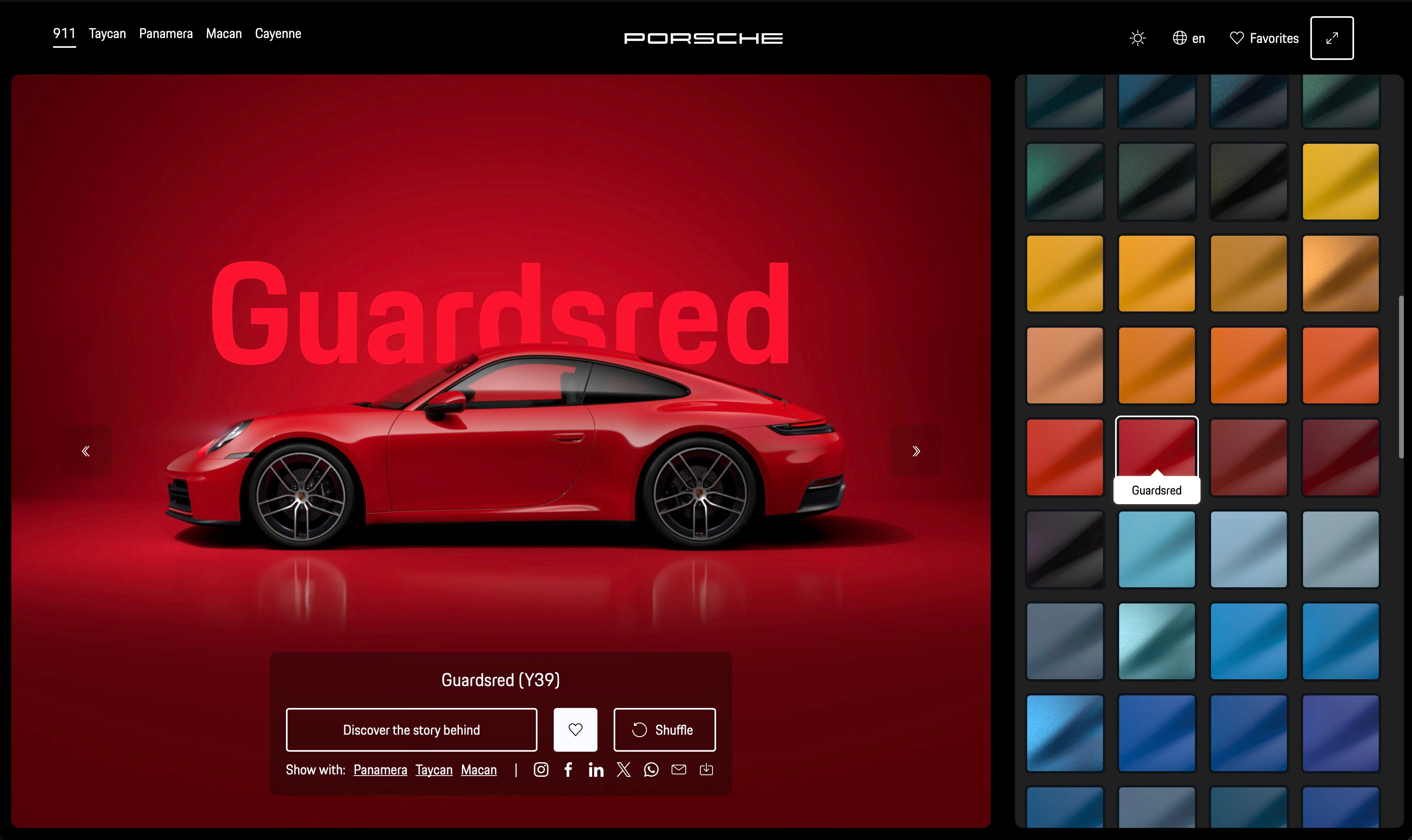
Porsche’s Paint-to-Sample (PTS) and expanded color programs have reintroduced a wave of vibrant, non-metallic shades that were once relegated to the history books — Signal Yellow, Ruby Star, Lighter Green, Linden Green, and Club Blue among them. Each of these colors comes with its own cult following, and importantly, a sense of rarity.
This resurgence of flat yet vivid tones offers owners the chance to make a more bespoke visual statement — and in doing so, may have diluted the impact of Guards Red. Where once it stood nearly alone in its category, it now shares the stage with a chorus of heritage hues that are often viewed as more daring or more exclusive.
The rarity factor plays a huge role here. Guards Red is a production color — relatively easy to option, widely available, and instantly recognizable. Ruby Star Neo or Signal Yellow, on the other hand, often require Paint-to-Sample requests, which means owners are consciously choosing something more unique. In the hyper-personalized world of modern Porsche builds, “standard” has quietly become shorthand for “less special.”
So, while Guards Red helped define Porsche’s visual identity, it’s now navigating a more crowded and more curated color space. It’s still a statement — just no longer a solo act. And amongst that abundance, it may have come full circle to feeling special again.
References
Rennbow : The Porsche Color Wiki — Guards Red
Porsche Paint-To-Sample : Guards Red
Exotic Car Colors — Guards Red : Porsche Paint Code
Elferspot — Porsche Red - Way more than just Guards Red
Porsche Knowledge — Porsche Colour Codes by Year
Porsche Newsroom — A glorious, colourful mixture: the different liveries of the 917 models
I have had two Guards Red vehicles - a Jensen and a Beetle. Both were restorations and the color choice was a homage to Porsche. It absolutely added to the feeling of each vehicle. I am not sure how else to put it. When it came time to restore a Land Rover, it had to be British Racing Green. Guards Red would have been ridiculous. Color perception is an example of qualia, something we know but cannot quite tie down in a logical derivation. Jeremy Clarkson would call this soul. Color is part of the soul of a machine. I think this is the essence of what you are exploring in your post.